What Makes a Play School Environment Safe, Fun and Engaging for Young Learners
posted on Jul 08, 2026
Gurukul The School Crossings, the best school in crossing republik where a well-designed preschool environment helps children settle into routines, build trust with teachers and develop early social
Introduction
A play school is often a child's first step outside the comfort of home. For young learners, this stage is not only about alphabets, numbers or rhymes; it is about feeling safe, making friends, expressing emotions and discovering the world with curiosity. At Gurukul Crossings, the best school in crossing republik where a well-designed preschool environment helps children settle into routines, build trust with teachers and develop early social, emotional and communication skills.
About Us
Gurukul Crossings focuses on creating a warm and child-friendly learning space where young learners can explore, question, imagine and grow at their own pace. The environment is designed to support early childhood development through care, creativity, guided activities and meaningful teacher-child interaction.
What Makes Safety the First Priority in Early Learning?
Safety is the foundation of every strong play school environment. Children between early preschool age and primary readiness are still developing balance, coordination, communication and emotional regulation. This makes adult supervision, child-safe infrastructure and hygienic surroundings extremely important.
A safe preschool should include clean and well-maintained classrooms, soft corners and age-appropriate furniture, and secure entry and exit points. It should offer supervised indoor and outdoor play areas, trained teachers and support staff, and regular hygiene practices, along with safe toys and learning materials and clear communication with parents.
Physical safety is only one part of the picture. Emotional safety matters equally. Children should feel comfortable asking questions, making mistakes, speaking freely and seeking help. A caring teacher can make a child feel seen, heard and valued.
How Does Fun-Based Learning Help Young Children Grow?
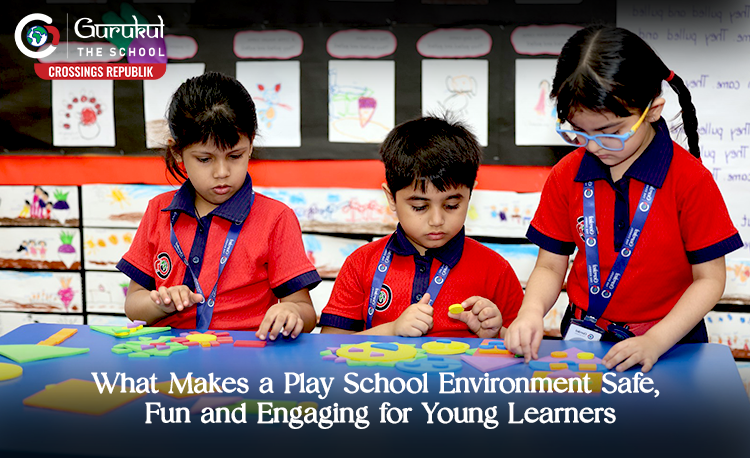
Young children learn naturally through play. When learning feels like pressure, they may become hesitant or withdrawn. But when concepts are introduced through stories, songs, games, role play, puzzles and art, children participate with excitement.
Fun-based learning supports language development through rhymes and storytelling, and builds motor skills through dance, play and movement. It nurtures creativity through colours, clay and craft, develops social skills through group activities, and grows confidence through show-and-tell sessions, while sharpening problem-solving through simple games and puzzles.
This is why the play schools focus on playful learning instead of rigid classroom instruction. A child who enjoys school is more likely to participate, remember concepts and build a positive attitude toward learning.
Why Is an Engaging Classroom Important for Preschoolers?
An engaging classroom does more than look colourful. It encourages children to think, touch, explore and respond. For preschoolers, engagement comes from variety, movement, conversation and hands-on experiences.
An effective classroom may include learning corners for reading, art and pretend play, visual charts and interactive displays, and music and movement activities. It can offer storytelling circles, sensory play materials and nature-based exploration, along with group learning tasks and teacher-led conversations.
Engagement also depends on the teacher's approach. A teacher who asks open-ended questions, listens patiently and encourages participation can turn simple activities into powerful learning moments. For example, a block-building activity can teach balance, colours, counting, teamwork and patience.
What Should Parents Look for Before Choosing a Play School?
Choosing a play school should not be based only on distance, fees or building size. Parents should observe how the school makes children feel. A child-friendly environment should be organised, cheerful, caring and developmentally suitable.
Parents can check the classroom setup, which reflects comfort, creativity and learning readiness, and teacher interaction, which shows care, patience and emotional support. Hygiene practices indicate health and daily safety, while activity planning reveals a balance of learning and play. The play areas point to physical development and supervision, and parent communication reflects transparency and trust.
A good preschool gives equal importance to academics, behaviour, independence, communication and emotional wellbeing. This balanced approach helps children adjust better and enjoy their early learning journey.
Safety, Fun and Engagement
Safety builds trust and confidence, so parents should notice a secure campus, hygiene and supervision. Fun keeps children excited to learn, which comes through music, games, art and stories. Engagement improves curiosity and participation, seen in interactive classrooms and hands-on tasks. Care supports emotional comfort, reflected in warm teachers and gentle communication. Routine creates stability through a balanced schedule with rest and play time.
Conclusion
A safe, fun and engaging play school environment helps young learners feel confident, curious and emotionally secure. At this age, children need more than structured lessons; they need warmth, movement, creativity, conversation and patient guidance. Gurukul Crossings brings together these early learning essentials to support children during their most formative years.
FAQs
Q: What should parents look for in a safe play school environment?
A: Parents should consider safety measures, teacher support, hygiene and child-friendly learning spaces.
Q: How does play-based learning help young children grow?
A: Play-based activities improve creativity, confidence, communication and social skills through enjoyable experiences.
Q: Why is a caring classroom important during early childhood?
A: A supportive classroom helps children feel comfortable, express themselves and develop independence.
Q: How does Gurukul Crossings create an engaging preschool experience?
A: The learning approach focuses on interactive activities, exploration and joyful experiences for young learners.
Q: What makes one play school different from another?
A: Teaching methods, safety standards, activity-based learning and teacher-child interaction create meaningful differences.
Q: Why do parents prefer child-focused preschool environments?
A: Child-focused spaces support emotional growth, curiosity and a positive attitude towards learning.