Why Is Learning to Wait an Important Skill for Young Children?
posted on Oct 29, 2026
Discover why learning to wait helps young children develop patience, self-control, emotional regulation, and essential social skills for lifelong success.
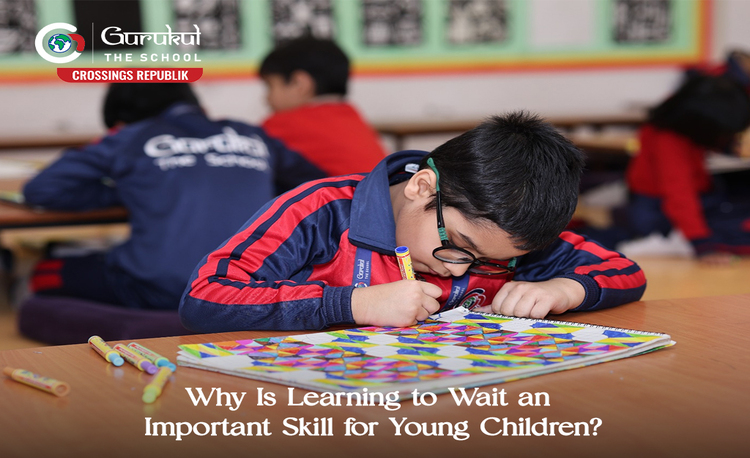
“Just one minute,” you say while finishing a phone call. Your child agrees, then asks for your attention again a few seconds later. You may recognise the same struggle when they wait for a swing, share a toy or listen while someone else speaks. They understand that their turn is coming, yet waiting still feels difficult.
For young children, knowing they must wait and managing the feelings that follow are different challenges. Excitement, frustration or the fear of missing out can quickly take over. They need practice and guidance to handle these moments.
At Gurukul The School, regarded as the best school in Crossings Republik, we believe these everyday experiences deserve thoughtful attention. When a child struggles to wait, our starting point is to understand what makes that moment difficult. Clear expectations and gentle reminders can help children learn how to participate while making space for others.
In this blog post today, let us see why learning is an important skill for children and how it can be developed.
Why Is Waiting Harder for Children Than Adults?
Adults can often remind themselves that a delayed reward is worth the effort. Young children are still developing the mental skills needed to do that consistently.
Harvard University's Center on the Developing Child explains that executive function and self-regulation help people manage information, focus attention, and control impulses. These abilities develop through experience and practice; children are not born with fully formed self-control.
Waiting also feels different depending on the situation. A child may patiently build a puzzle for twenty minutes but struggle to wait two minutes for a snack. Interest, tiredness, hunger, and stress all influence the experience.
What Does Waiting Actually Teach Children?
1. Respect for other people's turns
In a classroom discussion, a child may have an exciting answer. Waiting while someone else speaks helps them recognise that classmates also deserve to be heard.
This is not about silencing children. It is about teaching them to listen, remember their idea and contribute at an appropriate moment.
2. Managing disappointment
Suppose two children want the same swing. One must wait while the other finishes. The disappointed child can learn to name the feeling, ask when their turn will come, and choose another activity meanwhile.
Small experiences like these give children practice in managing frustration before they face more demanding situations.
3. Planning what to do next
Waiting isn't always passive. A child waiting for paint to dry can prepare the next part of an art project. Someone waiting for their turn in a game can watch the rules and plan a move.
This introduces the idea that not every delay is wasted time.
4. Working successfully with others
Group projects, sports, and classroom games all involve turn-taking. Children who practise waiting can find it easier to share materials, follow sequences, and participate without constant conflict.
How Can Parents Teach Patience Without Constantly Saying 'Wait'?
Start with realistic expectations. Asking a four-year-old to sit silently through a long adult conversation is different from asking them to wait briefly while you pour water. You can try practising the following to help build the skill in your children:
Make time visible. A sand timer or simple countdown can help younger children understand what 'two minutes' means.
Explain what happens next. 'After I finish this call, we'll look at your drawing' gives the child a clear expectation.
Practise through games. Board games, passing-the-parcel, and taking turns telling a story all involve waiting for a meaningful reason.
Acknowledge effort. 'You waited until your sister finished speaking' is more useful than a vague 'good child'.
Model patience yourself. Children notice whether adults interrupt, complain in queues, or become angry when plans change.
How Do We Help Children Learn to Wait at School?
At Gurukul The School, Crossings Republik, we approach waiting as a skill children need help to develop. When a child interrupts or becomes upset about a turn, we first consider the situation. Are they excited to contribute, unsure when their turn will come, or struggling with frustration? Understanding this helps us respond with suitable guidance.
We use clear routines to make classroom expectations easier to follow. Before a shared activity, we explain how children will take turns and what happens next. Knowing “You will have your turn after your classmate” gives a child something more definite than simply hearing “Wait”.
Our teachers also guide children through the feelings that arise during a delay. Acknowledging “You really want to use that colour” helps a child feel understood. We can then help them ask for a turn or choose something else meanwhile. During discussions, gentle reminders reassure children that their ideas matter and that they will have an opportunity to speak.
We build practice into shared games, group activities, and classroom conversations. These moments help children understand why turns matter. We also recognise specific progress, such as waiting until a classmate finishes speaking. This helps children notice what they have done successfully.
Frequently Asked Questions (FAQs)
Q. At what age should children learn to wait their turn?
Turn-taking can be introduced through simple games in the early years. Expectations should increase gradually with age and development.
Q. Is interrupting always a sign of poor discipline?
No. Excitement, difficulty remembering a thought, or developing self-regulation can all contribute. Look at the situation before reacting.
Q. Should I reward my child every time they wait?
Not necessarily. Specific praise and naturally enjoyable activities often work better than making every small delay a transaction.
Q. What if my child has a meltdown while waiting?
Help them settle first, then revisit what happened. Practise shorter waits when they are calm rather than teaching in the middle of distress.
Q. Can waiting skills help with schoolwork?
Yes. Self-regulation supports listening, following multi-step instructions, taking turns, and staying with tasks when immediate results are unavailable.
Conclusion
Learning to wait takes time, and progress will not look the same every day. A child may share patiently one morning and struggle the next. What helps is a steady response from adults: acknowledge the feeling, explain what happens next and recognise small improvements. At Gurukul The School, Crossings Republik, we view these moments as part of a child’s education.
A shared activity gives children practice in fairness. Waiting for a classmate to finish helps them learn to listen. Working through frustration gives them experience in expressing a need without overwhelming others. Our aim is to help children understand these situations and gradually manage them with greater independence.
We also believe school and home should support each other in this process. Parents can share what makes waiting difficult for their child, while teachers can discuss the routines and reminders that help. For us, aspiring to retain our position as the best school in Crossings Republik means paying attention to this everyday growth alongside academic progress.
We welcome you to speak with our team about your child’s early learning journey. Understanding how they respond to everyday challenges helps us explore the support they may need.